Geopolitics As Agrarian Geography: Notes for Agricultural Policy Co-Analysis

An agrarian geography lens helps clarify the ecological, social, experiential, cosmological, and even political-economic dimensions of what is framed as geopolitical. Overturning the nation-state as dominant scale of reference as well as the neoliberal hierarchy of ‘global’ over ‘local,’ agrarian geography grounds analysis in place-based knowledge, land-based life, social reproductive realms, embedded economics, and sovereignty. As such, it opens space for engaged agricultural policy co-analysis. Drawing on my research since graduating UK Geography, this presentation surveys key examples of how agrarian geography comprises geopolitics—from the seedkeeping tensions that led to and now fracture both the International Treaty on Plant Genetic Resources for Food & Agriculture and the World Trade Organization Agreement on Agriculture to the grassroots coalitions that drafted and achieved the UN Declarations on the Rights of Peasants & Others Working in Rural Areas. The US Farm Bill began from farm justice movement demands for agricultural parity, just as the Indian farmers uprisings to protect minimum support prices cracked India’s BJP hegemony. An agrarian geography lens elucidates the land-based resistance at the heart of Cold War geopolitics, as well as of course the Haitian, Mexican, and anticolonial revolutions. It unmasks the current genocidal war on Palestine for the land grab it is. The rise of authoritarian ethnonationalism requires critical agrarian geographic analysis. Across Turtle Island, to counter colonialist, white supremacist connotations of ‘agrarian,’ abolitionist orientation is needed—from bell hooks' work to tracing the Kentucky River's Afro-Caribbean legacies. Accordingly, abolitionist agrarian geographies help cultivate emancipatory inter-agricultural relations, diálogo de saberes, and thus agricultural policy co-analysis.

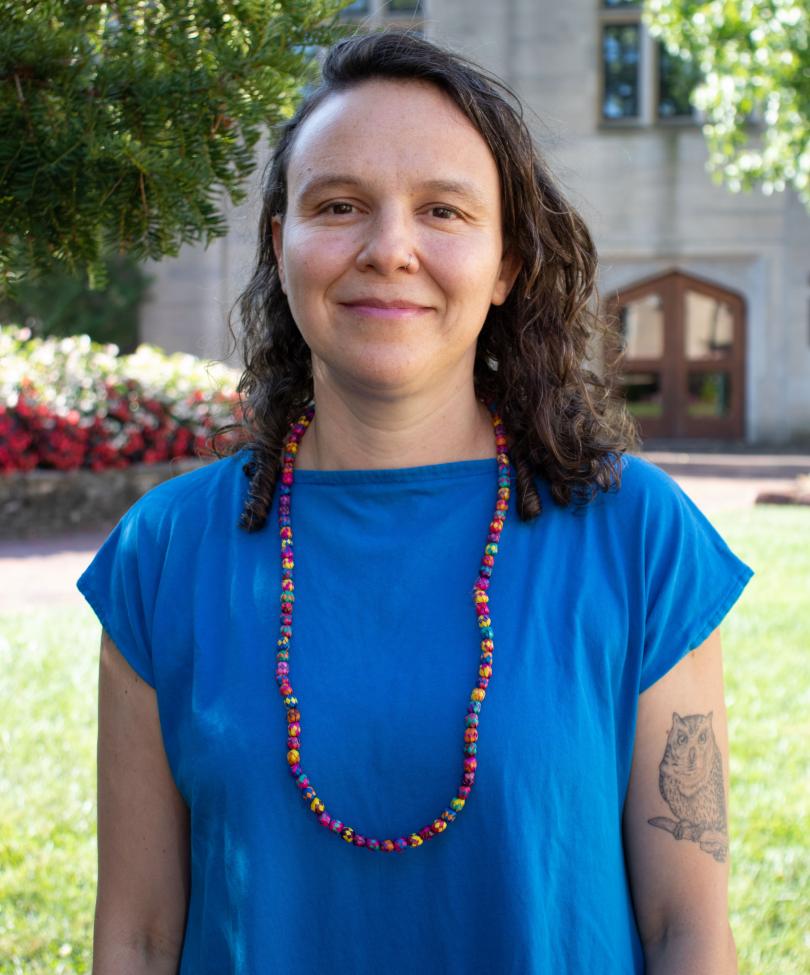
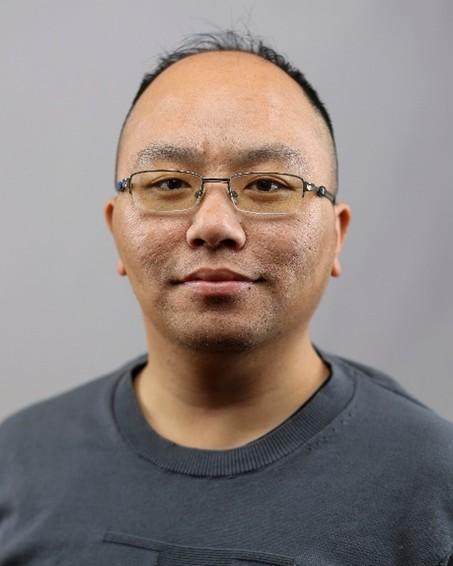
Born and raised in an agricultural community in Kentucky only beginning to reckon with its history of settler colonialism and slavery, Garrett Graddy-Lovelace now researches and teaches agricultural policy and agrarian geography as Provost Associate Professor of Environment, Development & Health Department at American University School of International Service (DC/Piscataway lands), where she co-founded the Ethnographies of Empire Research Cluster. Drawing on community-based scholarship, she also co-founded UK's Political Ecology Working Group, the Disparity to Parity project, the Agroecology Research-Action Collective, and the Pointing the Farm Bill toward Racial Justice initiative. She has a Masters of Theological Studies from Harvard Divinity School and is a proud 2011 alum of University of Kentucky’s Geography PhD Program.


Date:
-
Location:
Chemistry Physics Building Room 222

Prison Capital: Mass Incarceration and Struggles for Abolition Democracy in Louisiana (Book Launch)

Every year between 1998 to 2020 except one, Louisiana had the highest per capita rate of incarceration in the nation and thus the world. Prison Capital: Mass Incarceration and Struggles for Abolition Democracy in Louisiana (UNC Press) is the first book to track the multiscalar formation and contestation of the Louisiana carceral state. Through extensive research, Lydia Pelot-Hobbs illuminates how policy makers enlarged Louisiana’s carceral infrastructures with new prisons and jail expansions alongside the bulking up of police and prosecutorial power. Understanding Louisiana’s carceral crisis extends our understanding of the interplay between the crises of mass criminalization and racial capitalism while highlighting the conditions of possibility for dismantling carceral power in all its forms.

Lydia Pelot-Hobbs is an Assistant Professor of Geography and African American & Africana Studies at the University of Kentucky where she teaches and researches on the carceral state, racial capitalism, and grassroots social movements. She is the author of Prison Capital: Mass Incarceration and Struggles for Abolition Democracy in Louisiana (UNC Press) and co-editor of The Jail Is Everywhere: Organizing Against the New Geography of Mass Incarceration (Verso Books).


Date:
Location:
Chemistry Physics Building Room 139

2023-2024

FALL 2023


Friday, August 25, 3:00pm, Young Library Auditorium || Where did Geography take you this summer?

Friday, September 8, 3:00pm, Young Library Auditorium || Grief is a portal: on the alternative ontological times against environmental toxicity in Mexico :: Dr. Yoalli Rodriguez, Lake Forest College 

Friday, September 22, 3:00pm, Young Library Auditorium || The City after Property: Abandonment and Repair in Postindustrial Detroit :: Dr. Sara Safransky, Vanderbilt University

Arts and Sciences Distinguished Professor Lecture: The Changing Forms of Social Phenomena Today

The Changing Forms of Social Phenomena Today

In this talk, Ted Schatzki first describes the stream of social thought with which he is associated—theories of practices—before presenting a recently developed general framework for grasping contemporary sociodigital phenomena.

Dr. SchatzkiDr. Theodore Schatzki

Theodore Schatzki is professor of philosophy at the University of Kentucky. Additionally, he is a professor in the Department of Geography and, until September 2024, he is also professor of sociology at Lancaster University in the UK.  Schatzki earned a BA in applied mathematics from Harvard University (1977) and graduate degrees in philosophy from Oxford University (1979) and UC Berkeley (1986).  He joined the philosophy faculty at UK in 1986.

Schatzki’s research interests lie in theorizing social life.  He is widely recognized for his contributions to the contemporary stream of social analysis called practice theory, which is active today in multiple disciplines including sociology, geography, organizational studies, education, anthropology, international relations, and history.  Schatzki is the author of five single-authored monographs, the co-editor of six collected volumes, and responsible for almost ninety articles—and a slew of other pieces—on a wide range of topics in philosophy and social theory.  He has received research support from the Fulbright Commission, the Humboldt Foundation, the ESRC (UK), and the Leverhulme Trust.  Recent work concerns the digital shaping of associations, the notions of space needed to analyze digitalized social phenomena, and (with R. Friedland) a practice institutional analysis of blockchains, cryptocurrencies, and platforms. 

Schatzki has taught a wide variety of courses at UK and other universities in philosophy, geography, sociology, social theory, and environmental studies.  He has chaired nineteen PhD committees.  Administratively, he has served as cofounder and codirector of the Committee on Social Theory (1989-2000), chair of the philosophy department (2002-2007), and senior associate dean in the College (2008-17).  Currently, he is cofounder and co-organizer of a lively international practice theory community boasting over 500 members.  In this capacity, he is coresponsible for reading room series, an online graduate course in practice theory, an annual conference, and occasional topical workshops, among other activities.

Schatzki has been a guest professor or researcher at numerous universities oversees including the University of Exeter, The Max Planck Institute for the History of Science in Berlin, Aalborg University Copenhagen, the Karl-Franzens University in Graz, the Institute of Advanced Studies in Vienna, Lancaster University, the University of Bristol, the University of Zurich, the University of Bielefeld, the Free University in Berlin, The Charles Sturt University in Australia, the Catholic University Eichstaett-Ingolstadt in Germany, and the University of Bergen.  In the spring of 2018 he received an honorary doctorate from Aalborg University in Denmark.

A November 29, 2021 article in the Daily Nous based on the Scopus index listed Schatzki as the 13th most cited philosopher in the world in 2020.

Date:
Location:
WTY Library UKAA Auditorium and WTY Library Alumni Gallery

Geography Career Night

Geography Career Night is Wed., Feb. 7th, 5:00-7:00pm

Join a panel of alumni and professionals for a night dedicated to kickstarting your career. We'll be meeting in-person on Wed., Feb. 7th, at 5pm in the Stuckert Career Center on campus. Bring your resume to workshop with a career counselor and get a new professional headshot for your LinkedIn profile. Then stay for a panel discussion with alumni from UK Geography, discussing their career path after graduation:

Sean Conway graduated from the University of Kentucky in 2015 with a BA in Geography.  Starting his geospatial career at NV5 Geospatial, he spent 8 years progressing from a Geospatial Tech to the role of Orthoimagery Technical Domain Expert and Software Developer.  In 2023 he was approached by the National Geospatial-Intelligence Agency for a position in their St. Louis, MO facility where he is currently a Photogrammetrist in their Precise Imagery Division. 

Sandra Martinez (she/her) is currently working with the Riley-Decker Company under it's subsidiary The Job Center where she helps outgoing, talented individuals find jobs that fit their needs and skillsets. She serves as The Job Center's UPS Adminstrator meaning she's the liason between the internal Job Center team and the UPS account management team and ensures both teams communicate and collaborate seamlessly. Equipped with the analytical skills gained through her Geography degree, she's able to maintain and improve internal processes at The Job Center to ensure her team's workflow is effective and efficient.  

Benjamin Mills, an accomplished legal professional and educator, began his education at the United States Military Academy and has made significant strides in his career since graduating summa cum laude with a Bachelor of Arts in Geography from the University of Kentucky in 2017. Following his undergraduate education, Mr. Mills continued at the University of Kentucky J. David Rosenberg College of Law. While at law school, he completed a judicial externship for the United States Court of Appeals for the Sixth Circuit, an experience that afforded him extensive engagement in advanced legal research and writing.

Ellie Wellman graduated from UK in August of 2022 with a B.A. in Geography and a minor in Mapping and GIS. During the summer of 2022, she worked as an intern with the Kentucky Geological Survey to aid with a sinkhole mapping project. After graduation she began working with NV5 as an Orthographic Imagery Technician and has been working at NV5 for a year and a half. 


Click here for more information.

Date:
Location:
Stuckert Career Center
Subscribe to