About Geography / Geography Events / Dr. Pradyumna P. Karan Memorial Lecture Series in Geography

Dr. Pradyumna P. Karan Memorial Lecture Series in Geography

The Dr. Pradyumna P. Karan Memorial Lecture Series at the University of Kentucky honors the doctoral program that professor Pradyumna P. (P.P.) Karan launched in 1968.

The recipient of the Dr. Pradyumna P. Karan Memorial Lecture Series in Geography is selected by the graduate students in the Department of Geography at the University of Kentucky to honor the doctoral program that Professor P.P. Karan launched in 1968. Supported by an initial donation by the family of Professor Karan, this memorial lecture series is meant to serve the graduate program and the department in perpetuity.
Please contact the Geography Department's office for more information about joining us for the Karan Graduate Lecture. 

The first speaker for the Dr. Pradyumna P. Karan Memorial Lecture is Dr. Abdul Aijaz from Indiana University.


Factional Ecologies: Environmental Imagination and Hydrosocial Futures in Punjab

by Dr. Abdul Aijaz
 

Photo of 6 people in Punjab filling blue water canisters

People gathered around a water well and filling up water containers.

In this talk, I examine how environmental imagination, political contestation and ecological transformation intersect in the canal-irrigated landscapes of Punjab amid a global environmental crisis. By tracing the competing claims, uneven power relations and fractured visions of ecological futures that shape Punjab’s hydro-social assemblage.

I show how material and narrative infrastructures of development and crisis converge to produce both material ecologies and imaginaries of abundance, scarcity and decline. Reading literary texts, oral histories and everyday narratives alongside archival records and hydrological interventions, I demonstrate how environmental imagination mediates lived experiences of infrastructural power. 

Situating hydro-social futures within these contested imaginaries of place and people, I argue that Punjab’s ecological crisis demands attention to the cultural and political work through which water is rendered legible, governable and morally and materially charged. Using factional ecologies as a conceptual framework, I highlight the plurality of ecologies in struggle, where historical legacies and imaginative practices shape the possibilities of hydro-social futures and environmental justice.

Abdul Aijaz

Dr. Abdul Aijaz

Dr. Abdul Aijaz is a human geographer whose research brings together political ecology, environmental humanities and literary geographies to examine the entanglements of narrative, infrastructure and ecological crisis. He explores how global discourses of climate change are lived, contested and reimagined in the canal colonies of Punjab, Pakistan, an area shaped by the world’s largest contiguous irrigation system and a legacy of colonial hydrological engineering.


karan

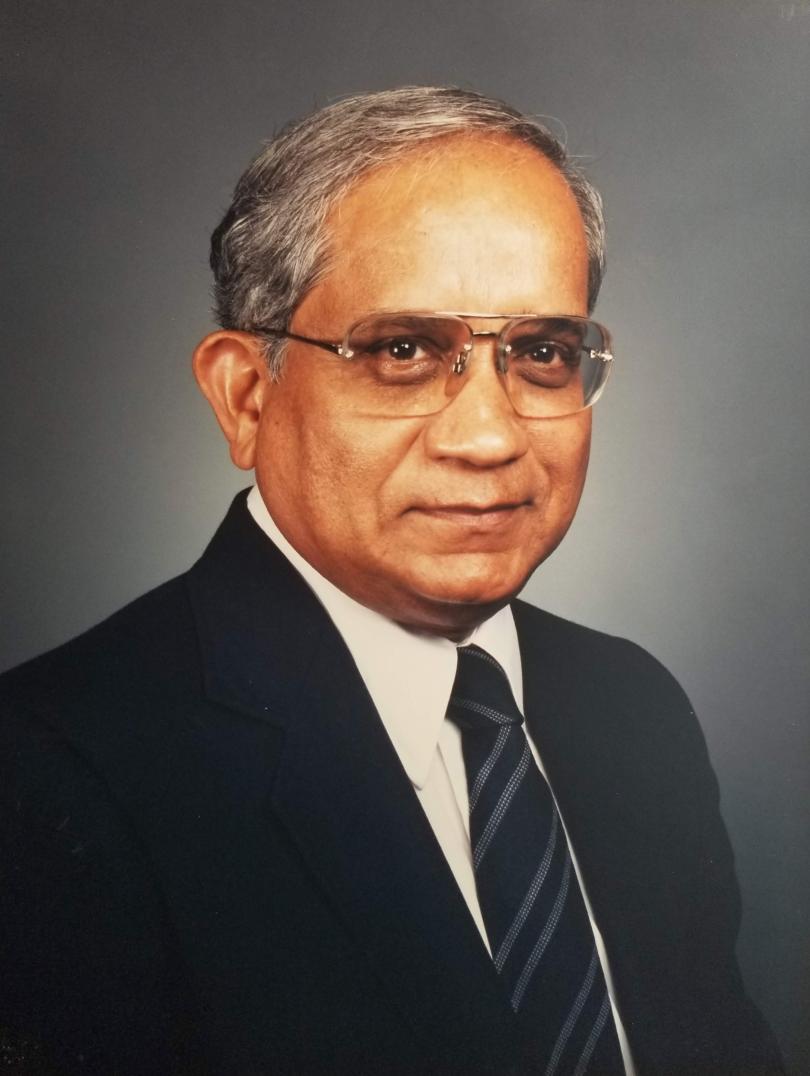
Dr P.P. Karan (1930-2018)

About P.P. Karan

Dr Karan was one of the most influential South Asian geographers in the United States. He was born on Feb. 9, 1930, in Gaya, India, a few miles from the site where Buddha attained enlightenment over 2,500 years ago, and died July 19, 2018, in Lexington. From 1956, his academic base was in the Department of Geography at the University of Kentucky, where he was professor between 1964 and 2017 and held a distinguished University Research Professor position from 2010 to 2017, during his last few years. He also served as department chair from 1967 to 1975, during which he oversaw the establishment of a doctoral program and the expansion of the department’s faculty during the mid-1970s. Following this time, he remained active as professor emeritus and maintained contact with national and international research communities. Professor Karan was an internationally recognized scholar of environmental management and sustainable development in the Himalayas. The focus of his research was on the applications of geographic theories to social and economic problems in the non-western world. Professor Karan was also interested in the disciplinary history of geography in the 20th century.

Dr Karan is remembered as a man of strong personality, wide sympathies and unselfish enthusiasm by family, friends, students and research collaborators alike. He was a loving and devoted husband to his wife Hazel, and a great uncle to his niece and nephews both in India and the United States. His influence and inspiration have not only been shared through the written word but perhaps to an even greater extent through personal conversations, lectures, in meetings with visiting researchers and at seminars and conferences. His students and colleagues can testify to the intellectual radiance that always surrounded him.


Past Speakers