
Following the COVID-19 pandemic, as information-technology companies expanded remote work opportunities for their employees, a dramatic increase in foreign remote workers ("digital nomads") moving to Mexico City for extended periods of time has occurred. In collaboration with 06600 Plataforma Vecinal y Observatorio de la Colonia Juárez, Proyecto Juaricua has mapped the swell of Airbnb listings in Mexico City between 2019-2024, particularly in central neighborhood of the Colonia Juárez.
This project documents a rise of mega hosts that have fueled evictions in central Mexico City, now operating hundreds of units in the city. This example reflects broader patterns of the financialization of housing on a global scale. While "digital" nomads’ often see themselves as transitory, their presence has had a lasting impact, normalizing racialized processes of dispossession that alter the landscapes of the neighborhood.
In this talk, I explore how housing organizers articulate this phenomenon as blanqueamiento por despojo (whitening by dispossession) to make sense of the modes of displacement and extraction occurring in the city as well as how they enact other, everyday ways to stake claims to the neighborhood. I ask what these notions of blanqueamiento reveal about longer histories of colonial dispossession and territoriality in Mexico and consider how the analytic of cuerpo territorio might deepen theorizations of gentrification.
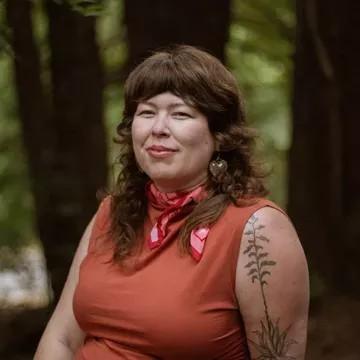
Margaret Marietta Ramírez, Ph.D. is the associate director of Chicana/o-Latina/o Studies at Stanford University. She is a feminist urban geographer whose work analyzes how minoritized peoples across North America resist urban dispossession and other injustices through spatial, cultural and artistic practices. She explores these themes across space and scale in her research and teaching, thinking transnationally and intersectionally to understand how cities are contested and spatially remade in the everyday by Latinx, Black and Indigenous communities. Ramírez’s writings have been published in journals such as Antipode, Society & Space,and Urban Geography as well as in such edited collections as Keywords for Gender and Sexuality Studies (2021), Counterpoints: A San Francisco Bay Area Atlas of Displacement & Resistance (2021)\ and Key Thinkers on Space & Place (2024). She leads the SSHRC-funded Proyecto Juaricua.