
Manufacturing Zones, Marinas, and “Order from above”: The marshes of state-private land development around Kampala, Uganda
by Caroline Faria, Ph.D.
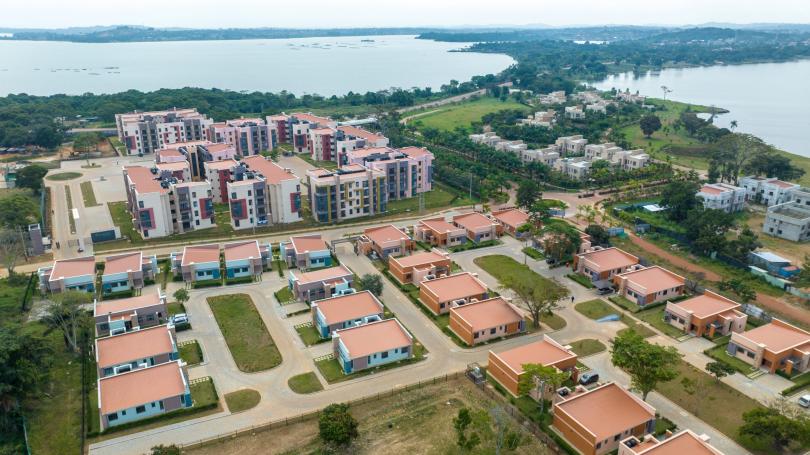
"The shores of Lake Victoria in Uganda are a rich and delicate ecological area. It is host to creeks and springs, swamps and wetlands that sustain life in and far beyond the region.
"In this talk, I draw on ongoing research with collaborators at UT Austin and Makerere University, Uganda. We center one key site where land, water and the political-economies of Ugandan neoliberalism mingle: the Ntabo/ Garuga peninsula and the development of Pearl Marina.
"This luxury residential development encroaches on and degrades the silted spaces of the marsh, dispossessing local communities; damaging plant, insect and animal life; and foreclosing opportunities to glean medicinal herbs, collect water and catch and trade in fish. A central irony of racio-colonial capitalism and neoliberalism, these publicly accessible resources are all-the-more vital now, given the privatization of health, water and other public goods in the last 40 years.
"Through archival research on these areas and interviews with urban planners, district politicians, developers and community-members, we trace how other forms of mingling makes this theft possible: faith in foreign investment, elite wealth-capture, “order from above” and residues of colonially grounded ideals of progress and improvement.
"Part of a larger collaborative project on the feminist political-ecologies of global retail capital, we examine the machinations of contemporary development in and around urban space, the stakes for local communities -- particularly low-income women -- and the socio-environmental impacts on wetland ecologies in Uganda."
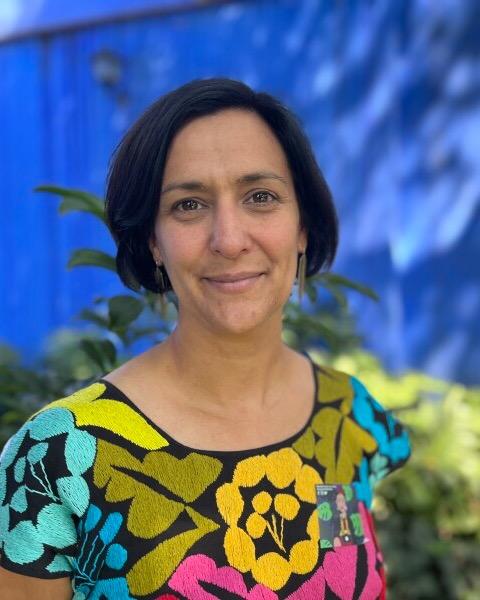
Caroline Faria, Ph.D. an associate professor of geography at the University of Texas at Austin, examines 20th- and 21st-century nationalism, development and neoliberal globalization. Her work analyzes the drivers and impacts of these processes and the connections between them, bringing together longstanding and complex bodies of scholarship on each area.
As a feminist geographer, Faria complicates conventional understandings of these dynamics by demonstrating how they are embodied. She employs a feminist “global-intimate” scalar lens to analyze how neoliberalism, nationalism and development are tied to gendered, racialized, classed and sexualized geometries of power; grounded in colonial and postcolonial histories; experienced unevenly; and lived in everyday life. Her research pays particular attention to undertheorized and typically marginalized people and places, especially women and communities in East Africa.